
Table of Contents
- Why Driveway Lighting Matters
- Recessed Ground Lights for Driveways
- LED Driveway Bollard Lights
- Driveway Lighting Design Principles
- Smart Outdoor Lighting Systems
- Colour Temperature and Aesthetic Impact
- Planning and Installation Considerations
- Frequently Asked Questions
Last Updated: October 2, 2026
Why Driveway Lighting Matters
Good driveway lighting does two things at once. It keeps your home safe after dark. It also transforms how your outdoor space looks.
A well-lit driveway prevents trips and falls. It deters intruders. It makes arriving home at night feel welcoming instead of dark and unwelcoming. Modern driveway lighting ideas go beyond basic function, they create atmosphere and add real value to your property.
The shift toward modern lighting design has changed what homeowners expect. Gone are the days of a single harsh light mounted above the garage. Today’s approach uses layered lighting, smart controls, and fixtures that blend seamlessly with contemporary garden design. The right driveway lighting can elevate an entire outdoor space, making it feel intentional and polished.
Recessed Ground Lights for Driveways
Recessed ground lights sit flush with your paving surface, creating a clean, contemporary look. They’re ideal for modern driveway designs because they don’t interrupt sight lines or create visual clutter.
These lights work best along the edges of your drive or pathway. They guide visitors safely while maintaining the visual flow of your landscape. The subtle illumination feels sophisticated and intentional rather than purely functional.
Installation requires proper groundwork planning. The base must be prepared correctly to prevent water pooling or settling around the fixtures. This is where professional installation matters, poor drainage under recessed lights leads to water ingress and early failure. Finescape Landscaping & Paving Ltd integrates recessed ground lights into the overall drainage and groundworks plan, ensuring they perform reliably for years.
Consider the spacing carefully. Lights spaced 1-2 metres apart provide adequate visibility without over-lighting. Closer spacing creates a more defined line; wider spacing feels more subtle and natural.
LED Driveway Bollard Lights
LED bollard lights are vertical posts, typically 600-900mm tall, that line your driveway or pathway. They offer a more traditional aesthetic than recessed lights while still delivering modern performance.
Bollard lights serve multiple purposes. They define the edge of your drive clearly. They provide wayfinding for visitors. They create a sense of enclosure and sophistication when arranged in a deliberate pattern.
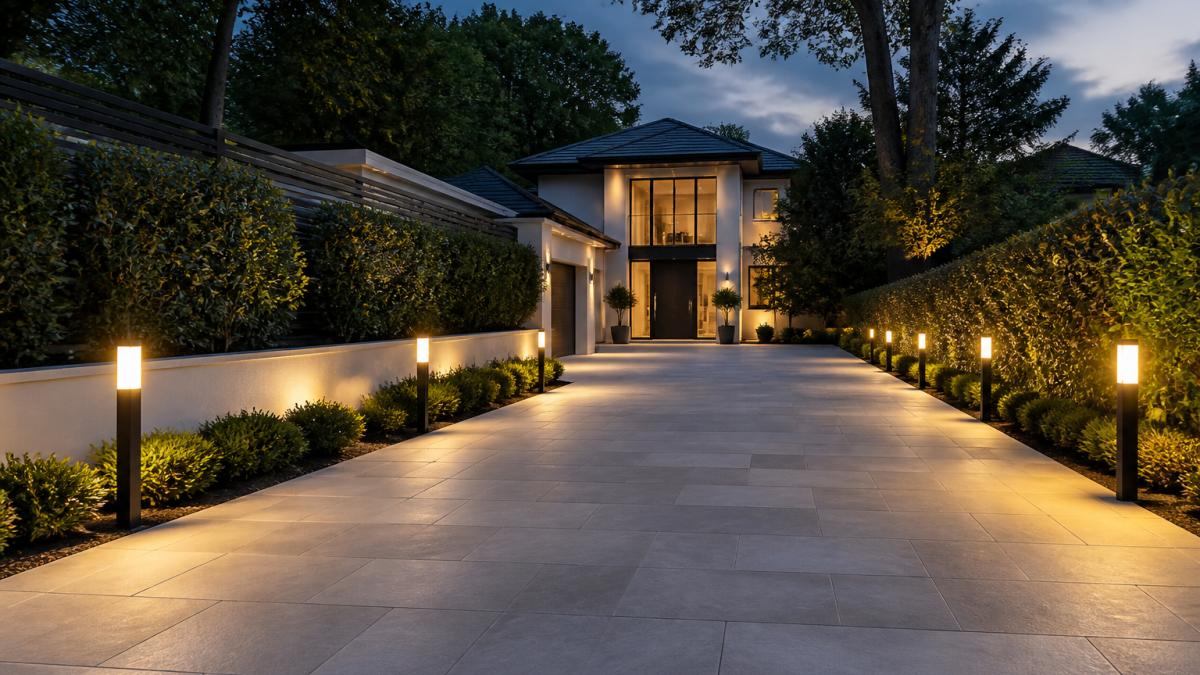
LED bollards run efficiently and last far longer than traditional halogen options. They generate minimal heat and consume a fraction of the electricity. Many modern bollards are now solar-powered, eliminating the need for underground cabling altogether.
The height and spacing of bollards affect how they look and function. Taller bollards (900mm) create a stronger visual statement. Shorter ones (600mm) feel more subtle and blend better with lower planting. Spacing them 2-3 metres apart maintains a sense of rhythm without feeling cluttered.
Driveway Lighting Design Principles
Modern driveway lighting design follows a few core principles. Start with purpose, then layer in aesthetics.
Create hierarchy in your lighting:
- Primary lights illuminate the main driving surface
- Secondary lights guide pedestrians along paths
- Accent lights highlight architectural features or planting
Match light colour to your design:
- Warm light (2700K) feels inviting and complements traditional materials
- Neutral light (4000K) suits contemporary designs and stone paving
- Cool light (5000K+) can feel harsh and clinical on residential driveways
Avoid over-lighting:
- Dark areas feel safer than uniformly bright ones
- Strategic shadows add depth and visual interest
- Overlighting creates glare and wastes energy
The best driveway lighting ideas balance these principles. A modern country home might use warm-toned bollard lights with subtle recessed accents. A contemporary townhouse might favour minimalist recessed lights with clean lines and neutral colour temperature.
Professional design considers the existing landscape, the style of your home, and how you actually use the space. Finescape Landscaping & Paving Ltd designs driveway lighting as part of the complete outdoor scheme, not as an afterthought. This ensures every light serves a purpose and contributes to the overall aesthetic.
Smart Outdoor Lighting Systems
Smart lighting systems give you control and flexibility that fixed installations cannot. Many modern driveway lighting ideas now incorporate smart technology as standard.
Smart systems let you adjust brightness, colour, and timing from your phone. Some integrate with your home automation setup. Others work independently with a dedicated app or remote control.
Smart lighting benefits:
- Adjust brightness seasonally or for different occasions
- Set schedules that match sunrise and sunset
- Reduce energy use by dimming when full brightness isn’t needed
- Receive alerts if fixtures fail or need maintenance
The technology has matured significantly. Modern smart outdoor lights are weather-resistant and reliable. Installation is straightforward when planned properly alongside your driveway design.
Not every project needs smart lighting. Simple, well-designed fixed lighting often works better for traditional properties or where you want minimal technology. Smart systems suit homes where flexibility and control matter most.
Colour Temperature and Aesthetic Impact
Colour temperature, measured in Kelvin (K), determines how warm or cool your lighting feels. This single choice affects how your entire driveway and garden appear.
Warm light (2700K-3000K) mimics traditional incandescent bulbs. It feels welcoming and complements natural stone, brick, and timber. Warm light is ideal for period properties and traditional garden designs.
Neutral light (4000K) sits between warm and cool. It’s clean and modern without feeling cold. Neutral light suits contemporary designs and shows off the true colour of materials like porcelain paving and grey stone.
Cool light (5000K and above) feels crisp and clinical. It’s rarely the right choice for residential driveways unless you’re specifically going for an industrial aesthetic. Cool light can make materials look harsh and uninviting.
The surrounding landscape influences your choice. Warm light reflects beautifully off honey-coloured stone and timber. It enhances the golden tones of gravel. Neutral light works best with grey tones, contemporary materials, and minimalist designs.
Planning and Installation Considerations
Proper planning prevents costly mistakes. Before installing driveway lighting, consider these practical factors.
Electrical supply and cabling:
- Decide whether to run cables above ground (less disruptive) or underground (neater but more work)
- Underground cables require proper conduit and protection
- Above-ground cables can be hidden behind planting or along fence lines
- Professional installation ensures compliance with building regulations
Power supply options:
- Mains power is reliable and suitable for any light type
- Solar power works well for bollards and recessed lights in sunny locations
- Battery-powered lights offer maximum flexibility but need regular charging
- Hybrid systems combine solar with battery backup for reliability
Integration with drainage:
- Poor drainage around lights causes water ingress and failure
- Ground preparation must account for surface water management
- Recessed lights need proper fall and drainage channels
- Finescape Landscaping & Paving Ltd plans lighting alongside overall site drainage to prevent problems
Maintenance access:
- Position lights where you can access them for cleaning and bulb changes
- Plan for vegetation growth, trees and shrubs will eventually shade lights
- Choose fixtures you can actually maintain without specialist equipment
Building regulations:
- Most driveway lighting doesn’t require building control approval
- Electrical work must comply with BS 7909 (temporary lighting) or BS 7671 (permanent installations)
- Professional installers understand local requirements and ensure compliance
Planning these details upfront saves money and ensures your driveway lighting performs reliably for years. A well-designed installation blends seamlessly into your landscape and requires minimal ongoing attention.
Modern driveway lighting transforms your outdoor space from functional to exceptional. Whether you choose recessed ground lights for a minimalist look or LED bollard lights for defined elegance, the right approach depends on your home’s style and how you use the space. Finescape Landscaping & Paving Ltd designs and installs driveway lighting that combines safety, aesthetics, and reliability. We integrate lighting into your complete garden design, ensuring every element works together. Get in touch today to discuss your driveway lighting ideas and discover how professional design can elevate your home’s outdoor presence.
Frequently Asked Questions
What are the best types of lighting for a modern driveway?
Modern driveway lighting typically combines multiple types: LED bollard lights for edge definition, recessed ground lights for subtle ambient illumination, and wall-mounted uplighters for house frontage. The best choice depends on your driveway layout, aesthetic preference, and whether you prioritise safety, ambience, or both. LED options offer energy efficiency and longevity, while smart systems allow you to adjust brightness and colour temperature remotely.
Do I need planning permission for driveway lighting in the UK?
Most residential driveway lighting doesn’t require planning permission, as it falls under permitted development. However, check with your local planning authority if your property is listed, in a conservation area, or if lights are unusually prominent or bright. Commercial properties may have additional requirements. It’s wise to verify before installation to avoid complications.
What colour temperature works best for driveway lighting?
Warm white light (2700K–3000K) creates a welcoming, sophisticated ambience and reduces glare, making it ideal for residential driveways. Cool white (4000K–5000K) offers better visibility for security purposes but can feel harsh. Many homeowners combine both: warm light for aesthetic appeal and cooler tones near entry points for safety. Smart systems let you adjust colour temperature throughout the day.
Are LED lights more expensive than traditional outdoor lighting?
LED lights typically consume significantly less energy and last far longer than traditional halogen or incandescent options. This means lower electricity bills and fewer replacements, making LEDs a cost-effective choice over time. For a professional driveway lighting installation, consult Finescape for current pricing and long-term value assessment.
