
Table of Contents
- Why Garden Drainage Matters for Your Outdoor Space
- Benefit 1: Prevents Waterlogging and Standing Water
- Benefit 2: Extends the Life of Patios, Paving and Driveways
- Benefit 3: Protects Building Foundations and Structural Integrity
- How to Improve Garden Drainage: Understanding Your Options
- Benefit 4: Creates Usable Garden Space Year-Round
- The Garden Drainage Installation Process Explained
- Benefit 5: Reduces Maintenance Costs and Future Repairs
- Frequently Asked Questions
Last Updated: 9 October 2026
Why Garden Drainage Matters for Your Outdoor Space
Poor drainage is one of the most overlooked problems in garden design. When water cannot escape naturally from your garden, it pools in low spots, damages hardscaping, and weakens the foundations of your home. Professional garden drainage installation transforms outdoor spaces that were previously unusable after rain.
Garden drainage installation isn’t just about moving water away. It’s about protecting your investment in your garden, your patio, your driveway, and your home itself. The right drainage system works silently in the background, keeping your outdoor space dry and functional year-round.
This guide covers the five key benefits of professional garden drainage installation, explains your options for improving drainage, and shows why working with experienced professionals matters.
Benefit 1: Prevents Waterlogging and Standing Water
Standing water is the enemy of any garden. It kills grass, creates mud patches, and becomes a breeding ground for insects and disease.
Professional garden drainage installation solves this problem by directing water away from problem areas. Instead of pooling on your lawn, water flows through a designed system and away from your property. Your garden becomes usable again, even after heavy rain.
The difference between a poorly drained garden and a well-drained one is immediate:
- Soggy lawns become firm ground within days of rainfall
- Mud disappears from high-traffic areas
- Plants thrive instead of rotting from waterlogged soil
- Insects and algae no longer breed in stagnant pools
Many homeowners assume waterlogging is just “part of having a garden in this climate.” It isn’t. With the right drainage system in place, your garden stays dry and usable throughout the year.
Benefit 2: Extends the Life of Patios, Paving and Driveways
Water is the silent destroyer of hard landscaping. It works its way under paving, freezes in winter, and forces stones upward. Within a few years, your beautiful new patio or driveway starts to crack, sink, and shift.
Professional garden drainage installation prevents this damage by controlling water before it reaches the base layers of your paving.
Here’s what happens without proper drainage:
- Water pools beneath paving and creates soft spots
- Frost action in winter expands water and pushes stones up
- Subsurface water erodes the bedding material
- Individual stones start to rock and crack
With professional garden drainage installation, your patio and driveway foundation stays stable and dry. The paving sits on a solid, well-drained base that won’t shift or settle.
This is why the preparation stage of any paving project matters so much. At Finescape Landscaping & Paving Ltd, we design drainage into every patio and driveway from the start. Water is managed before it becomes a problem, not after.
Benefit 3: Protects Building Foundations and Structural Integrity
Water running toward your house is a serious threat to its structural integrity. Moisture penetrates foundations, causes subsidence, and creates damp problems inside your home.
Professional garden drainage installation creates a barrier that keeps water away from your building. It’s one of the most important investments you can make for your home’s long-term health.
Water damage to foundations develops slowly but causes expensive repairs:
- Subsidence, water softens soil and foundations settle unevenly
- Damp problems, moisture travels through walls and into your home
- Cracked walls, structural movement from unstable ground
- Costly repairs, foundation work can cost thousands to put right
A properly designed drainage system keeps water moving away from your house. This protects not just your garden, but your entire property.
How to Improve Garden Drainage: Understanding Your Options
If your garden suffers from poor drainage, you have several solutions. The right choice depends on your garden’s slope, soil type, and where the water needs to go.
Surface drainage moves water across the garden using gentle slopes and channels. This works well for sloping gardens where water naturally flows downhill.
Subsurface drainage uses underground pipes and gravel layers to collect and move water. This is the solution for flat gardens where water pools on the surface.
Soakaway systems collect water in a pit and allow it to drain slowly into the soil. These work best in gardens with good soil drainage.
The best approach often combines two or more methods. A professional survey of your garden identifies which system, or combination of systems, will work best for your specific situation.
French Drain Installation for Effective Water Management
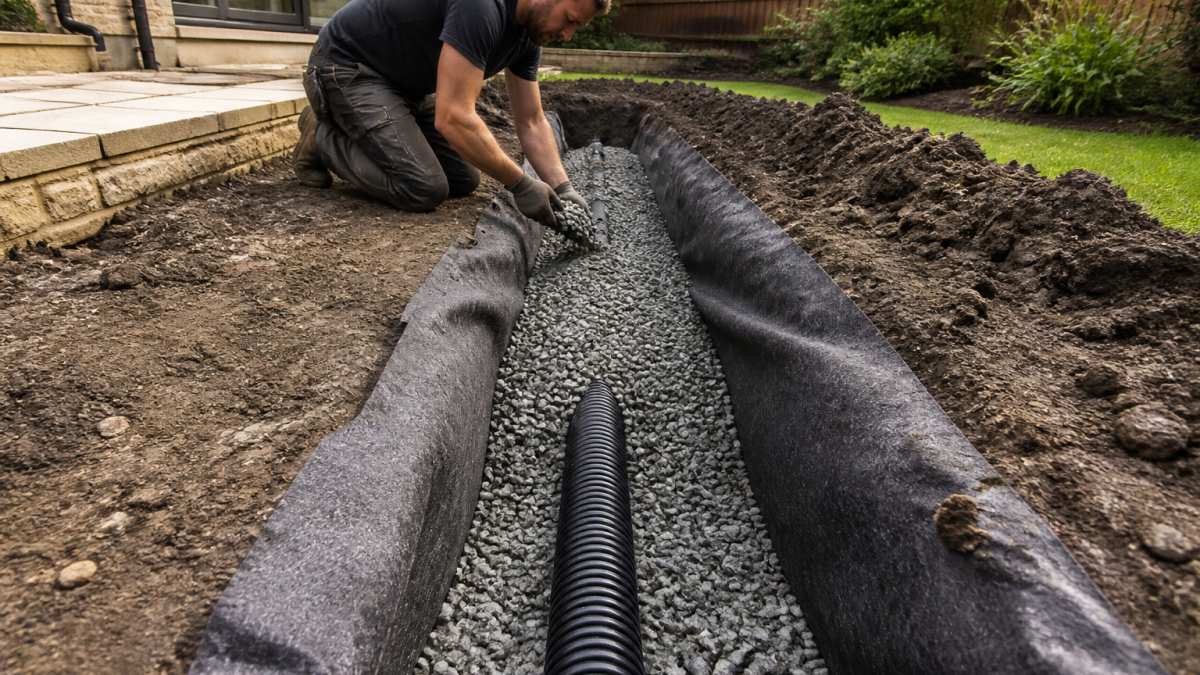
A French drain is a trench filled with gravel and a perforated pipe that collects water and directs it away from problem areas. It’s one of the most effective solutions for waterlogged gardens.
French drain installation involves:
- Digging a sloped trench from the wet area to a drainage point
- Laying a perforated pipe in the bottom of the trench
- Filling the trench with gravel and geotextile fabric
- Capping the trench with soil and turf or paving
The water seeps through the gravel, enters the pipe, and flows downhill to a soakaway, drainage ditch, or surface water drain. The system works continuously, even during heavy rain.
French drains are particularly effective in gardens with clay soil, where water doesn’t drain naturally. They’re also ideal for gardens with a slope, where you can direct water downhill and away from your property.
Benefit 4: Creates Usable Garden Space Year-Round
A wet garden is an unusable garden. You can’t sit outside, children can’t play, and the garden becomes a liability rather than an asset.
Professional garden drainage installation transforms your outdoor space into somewhere you actually want to spend time. Your garden becomes an extension of your home, usable in all seasons and all weathers.
The difference is remarkable:
- Summer entertaining, dry patio and level lawn
- Winter walks, firm ground instead of mud
- Play areas, safe, dry space for children
- Garden furniture, no need to store everything indoors after rain
When drainage works properly, your garden serves its purpose. You use it more, enjoy it more, and get better value from your investment.
The Garden Drainage Installation Process Explained
Professional garden drainage installation follows a structured process. Understanding what’s involved helps you appreciate why it matters and why it’s worth getting right.
Step 1: Site survey and assessment
A professional surveyor assesses your garden’s slope, soil type, and water flow patterns. They identify where water pools and where it should go. This survey determines the drainage system design.
Step 2: Design the system
The design specifies pipe routes, trench depths, gradients, and outlet locations. A properly designed system works with gravity, not against it. Poor design leads to standing water and failed drainage.
Step 3: Excavation and preparation
Trenches are dug to the correct depth and slope. The ground is prepared to receive pipes and gravel. This stage requires precision, a shallow trench or incorrect gradient means water won’t flow properly.
Step 4: Pipe installation
Perforated pipes are laid in the trench at the correct slope. The pipes collect water and direct it toward the outlet. Proper installation ensures water moves continuously.
Step 5: Backfilling and finishing
Gravel, geotextile fabric, and soil are layered in the trench. The surface is reinstated with turf or paving. The finished garden shows no sign of the drainage system beneath.
Each step matters. Cut corners at any stage and the system fails to work properly.
Benefit 5: Reduces Maintenance Costs and Future Repairs
Poor drainage creates expensive problems. Cracked paving, damp walls, and unstable ground all cost money to repair.
Professional garden drainage installation is an investment that prevents these costs. You spend money once, upfront, and avoid spending much more on repairs later.
Consider the costs of drainage failure:
- Patio replacement, cracked and sunken paving
- Driveway repairs, subsidence and surface damage
- Foundation repairs, structural movement and damp treatment
- Ongoing maintenance, patching cracks and replacing stones
A professional garden drainage installation system works for decades with minimal maintenance. It prevents the cascade of problems that poor drainage creates.
At Finescape Landscaping & Paving Ltd, we design drainage systems that protect your investment. Whether you’re installing a new patio, building a driveway, or tackling a waterlogged garden, proper drainage saves money in the long run.
Poor drainage turns a garden from an asset into a problem. Standing water damages your paving, threatens your foundations, and makes your outdoor space unusable. Professional garden drainage installation solves these issues at source. Finescape Landscaping & Paving Ltd designs and installs drainage systems that work with your garden’s natural slope and soil conditions, keeping water moving away from your property and your home. Contact us today for a site survey and drainage design that protects your garden and your investment.
Frequently Asked Questions
What are the main signs that a garden needs professional drainage installation?
Common indicators include standing water after rain that persists for hours or days, patches of moss or algae on lawns, soft or boggy areas underfoot, cracks in nearby patios or paving, and damp patches on house walls. If your garden remains waterlogged during winter or after heavy rainfall, professional drainage assessment is worthwhile. A drainage professional can identify whether the issue stems from poor soil composition, inadequate slope, or blocked existing drainage systems.
How does professional garden drainage installation prevent damage to patios and paving?
Water trapped beneath patios and driveways causes frost heave in winter, where frozen water expands and lifts the surface. This creates cracks, subsidence, and uneven surfaces. Professional drainage redirects water away from these structures through systems like French drains or surface channels, keeping foundations dry. Proper ground preparation combined with effective drainage means your patio or driveway maintains its level surface and structural integrity for decades rather than developing costly damage within a few years.
Can garden drainage be incorporated into a complete garden redesign?
Yes. Drainage is often best planned as part of a comprehensive garden transformation rather than as a separate project later. During a full redesign, drainage can be integrated strategically with new patios, planting beds, and landscaping features. This approach ensures water management works seamlessly with your overall garden layout and design aesthetic, rather than appearing as an afterthought. Professional landscape designers assess drainage needs from the outset and incorporate solutions that enhance rather than detract from your outdoor space.
How long does professional garden drainage installation typically take?
Installation timescale depends on garden size, drainage system complexity, and soil conditions. A straightforward French drain system for a small garden might take a few days, whilst comprehensive drainage for a larger property with multiple problem areas could span 1-2 weeks. Your drainage professional will provide a realistic timeline during the initial site assessment, accounting for excavation, pipe laying, backfilling, and reinstatement of the garden surface.
