
Table of Contents
- Why Driveway Material Choice Matters on a Slope
- Porcelain Paving: Slip-Resistant and Durable
- Natural Stone: Premium Grip and Longevity
- Permeable Driveway Paving for Sloped Ground
- Best Material for a Steep Driveway: Resin-Bound Surfaces
- Gravel Driveway on a Slope: Challenges and Solutions
- Driveway Drainage on a Slope: Essential Preparation
- Choosing the Right Material for Your Sloped Driveway
- Frequently Asked Questions
Last Updated: 12 October 2026
Why Driveway Material Choice Matters on a Slope
Selecting the right driveway material among the 5 best driveway materials for sloped gardens isn’t simply about aesthetics. The gradient fundamentally changes how water drains, how surfaces grip underfoot, and how long your investment will last. A material that performs brilliantly on flat ground can fail within months on a slope if it lacks proper slip resistance or drainage capability.
At Finescape Landscaping & Paving Ltd, we design and build driveways across sloped properties throughout Berkshire, Oxfordshire, Wiltshire and Hampshire. The difference between a driveway that lasts decades and one that shifts, cracks or becomes treacherous comes down to material selection and ground preparation working together. Your choice of surface directly impacts safety, longevity and maintenance demands.
The steeper your slope, the more critical these factors become. Water runs faster downhill, putting pressure on drainage systems. Vehicles accelerate their descent, increasing tyre slip risk. Frost and thaw cycles work harder on inclines, pushing materials apart. This guide explores the 5 best driveway materials for sloped gardens, examining what makes each suitable, or unsuitable, for gradient conditions.
Porcelain Paving: Slip-Resistant and Durable
Porcelain paving has emerged as one of the most reliable choices for sloped driveways. Its dense, non-porous surface resists water absorption, which prevents frost damage and reduces algae growth that creates slippery conditions.
The slip resistance of porcelain is its standout feature on inclines. Manufacturers produce porcelain with textured finishes specifically designed for outdoor use on gradients. The surface grip remains consistent even when wet or icy, making it safer for vehicles and pedestrians.
Durability is another strength. Porcelain doesn’t chip, crack or stain easily. It handles freeze-thaw cycles without degradation because water doesn’t penetrate the material. On a slope where water constantly flows across the surface, this impermeability prevents the internal damage that destroys less dense materials.
The main consideration is installation complexity. Porcelain requires a properly engineered base and professional laying to ensure water drains correctly and the surface sits perfectly level despite the gradient. Improper installation can lead to pooling or uneven settling. This is why working with experienced landscapers matters, the material itself is forgiving, but the foundation work determines success.
Porcelain comes in dozens of finishes and colours, from stone-effect to contemporary designs. It suits both traditional country properties and modern homes equally well.
Ensure your installer uses a permeable base layer beneath porcelain on slopes. This allows water to drain away rather than pooling beneath the surface, which can cause frost heave and material lift.
Natural Stone: Premium Grip and Longevity
Natural stone, granite, sandstone, slate and limestone, offers authentic character and genuine longevity on sloped driveways. Each stone type behaves differently, so understanding the specifics matters.
Granite is the hardest and most durable option. It resists wear, doesn’t stain easily and provides excellent natural grip, especially when split-faced or honed. Granite’s density means water doesn’t penetrate, so frost damage is minimal.
Sandstone and slate offer visual warmth that granite lacks, but require more maintenance. Softer stones absorb water more readily, making them vulnerable to frost damage in harsh winters. However, their natural texture provides good grip, and their rustic appearance suits country properties particularly well.
The slip resistance of natural stone varies by finish. Honed or split-faced surfaces grip better than polished finishes. On a slope, avoid highly polished stones, they become dangerously slippery when wet.
Natural stone does settle and shift over time, especially on gradients. Proper base preparation and regular inspection are essential. Stones may need relevelling after a few years as the ground beneath settles or frost heave occurs.
Installation must be precise. Gaps between stones can become repositories for moss and algae, which develop faster on slopes where moisture constantly flows. Sealing natural stone helps, though it requires periodic reapplication.
Never choose polished natural stone for a sloped driveway. The glossy finish becomes treacherous when wet or icy, creating a genuine safety hazard for vehicles and pedestrians.
Permeable Driveway Paving for Sloped Ground
Permeable paving systems, typically made from porous asphalt, recycled plastic grids with gravel, or permeable concrete blocks, allow water to drain through the surface rather than running off.
Traditional impermeable surfaces channel water downhill, which can erode lower areas and overwhelm drainage systems. Permeable systems let water soak through, reducing surface runoff and recharging groundwater (What are sustainable urban drainage systems | Flood risk management).
The grip characteristics of permeable paving depend on the specific system. Recycled plastic grids filled with gravel offer decent traction, though gravel can shift on steep slopes. Permeable concrete blocks provide better stability.
The main challenge with permeable systems on slopes is maintenance. Gravel-based systems need topping up as material settles or washes away. Porous surfaces can clog with debris and algae, reducing drainage efficiency.
Installation is more technical than standard paving. The base layers must be engineered to manage water flow without pooling. On a slope, this means careful grading and sometimes additional drainage channels to direct water safely away.
For environmentally conscious homeowners and those in areas with strict drainage regulations, permeable paving is worth the extra maintenance commitment. It’s also an excellent choice if your slope drains toward a sensitive area where runoff needs controlling.
Best Material for a Steep Driveway: Resin-Bound Surfaces
Resin-bound paving represents a modern solution for steep driveways. These surfaces consist of decorative aggregate (stone chips, glass or recycled materials) bound together with a clear resin binder, creating a seamless, permeable finish.
The slip resistance of resin-bound surfaces is excellent. The aggregate creates natural texture and grip, and the surface doesn’t become slippery when wet. This makes it particularly suitable for steep slopes where safety is paramount.
Resin-bound paving is also highly durable and low-maintenance. The seamless surface prevents weeds from establishing, and water drains through the permeable matrix beneath.
Installation requires specialist knowledge. The base must be absolutely level and properly drained, and the resin application must be precise. Temperature and humidity conditions during installation matter significantly. This means choosing an experienced installer is non-negotiable.
The aesthetic appeal is another advantage. Resin-bound surfaces are available in countless colour and aggregate combinations, allowing bespoke designs that suit any property style. The seamless finish looks contemporary and clean, quite different from traditional paving.
Longevity is excellent; a properly installed resin-bound driveway can last 15-20 years. For steep slopes where durability and safety are priorities, this material often justifies the investment.
Resin-bound surfaces excel on steep slopes because they combine excellent grip, seamless durability and permeable drainage, all without the maintenance demands of some alternative materials.
Gravel Driveway on a Slope: Challenges and Solutions
Gravel driveways are visually appealing, but slopes present genuine challenges that need addressing.
Water runoff is the primary issue. On a flat surface, gravel drains reasonably well. On a slope, water flows downhill rapidly, washing gravel away and creating ruts. Over time, your driveway becomes uneven, with bare patches and concentrated water channels. This requires frequent raking and topping up, far more maintenance than flat gravel driveways demand.
Slip resistance depends on gravel type. Angular, sharp-edged gravel grips better than rounded pea gravel. For a slope, choose angular types like crushed granite or slate chips. Even so, loose gravel provides less security than bound surfaces, especially in icy conditions.
Stabilisation systems can help. Recycled plastic grids or permeable cellular systems hold gravel in place, reducing washout and rut formation. These grid systems are more expensive than loose gravel but dramatically improve performance on slopes. They also reduce maintenance frequency, topping up becomes an annual task rather than a quarterly one.
The visual appeal of gravel is genuine. It suits country properties beautifully. If you’re willing to commit to regular maintenance, a properly stabilised gravel system can work on moderate slopes. Steep slopes, however, are problematic, the material simply won’t stay where you put it.
Avoid loose gravel on slopes steeper than 1:10 (approximately 10% gradient).
Driveway Drainage on a Slope: Essential Preparation
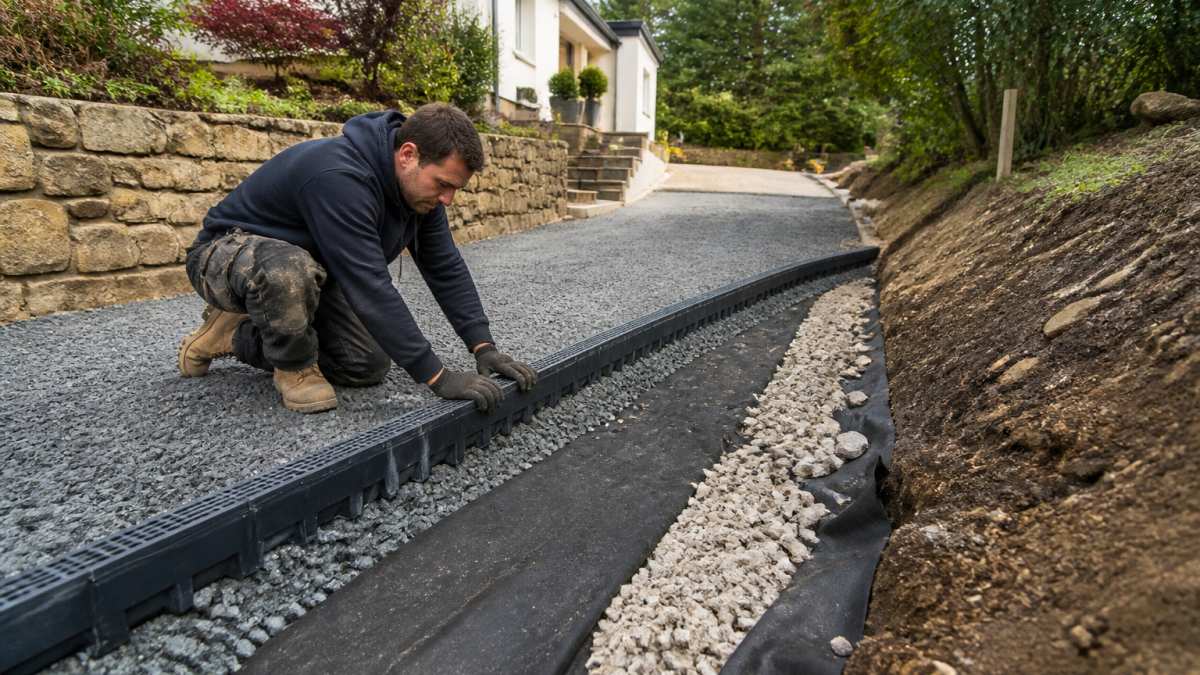
Drainage isn’t optional on a sloped driveway, it’s foundational. Poor drainage causes virtually every driveway failure: material shift, frost heave, algae growth and surface deterioration.
On a slope, water naturally wants to flow downhill. Your drainage design must work with this, not against it. The base layers beneath your chosen surface material need to be engineered to allow water to move away safely, preventing it from pooling beneath the surface.
A proper sloped driveway typically includes:
- Permeable base layers, granular material (typically Type 1 or similar) that allows water to drain through while supporting the surface
- Gradient management, the surface itself should slope gently across its width to shed water sideways, preventing straight downhill flow that concentrates and accelerates water
- Edge drainage, channels or gravel boards at the driveway edges to intercept and direct water away from the surface
- Subsurface channels, in some cases, French drains or similar systems run beneath the driveway to manage groundwater and surface seepage
The steeper your slope, the more critical these measures become. A 1:20 gradient (5%) needs careful drainage design. A 1:10 gradient (10%) requires sophisticated engineering to prevent water damage.
Professional assessment is essential. Your landscaper should evaluate your site’s drainage patterns, soil type and gradient to specify appropriate measures. This preparation work determines whether your driveway lasts 20 years or fails within five.
Choosing the Right Material for Your Sloped Driveway
The best material for your sloped driveway depends on gradient steepness, budget, maintenance tolerance and aesthetic preference. Here’s how to think through the decision:
For steep slopes with safety as the priority: Porcelain paving or resin-bound surfaces excel. Both offer excellent slip resistance, durability and minimal maintenance. Porcelain suits traditional properties; resin-bound works for contemporary designs.
For slopes with environmental concerns or planning requirements: Permeable paving systems, whether recycled plastic grids, permeable concrete or resin-bound, manage runoff effectively and satisfy regulatory requirements.
For moderate slopes on country properties: Natural stone offers authentic character and longevity, provided you accept occasional relevelling and commit to maintenance. Granite is the most forgiving choice.
For budget-conscious approaches to moderate slopes: Stabilised gravel systems work reasonably well, though maintenance demands remain higher than bound surfaces.
Whatever material you choose, the foundation determines success. Proper drainage design, correct base preparation and professional installation matter more than the surface material itself. A premium material installed poorly will fail faster than a standard material installed correctly.
At Finescape Landscaping & Paving Ltd, we design sloped driveways by starting with your site’s specific conditions, gradient, soil, drainage patterns and climate, then recommending materials and preparation methods proven to perform. We manage the entire process from initial assessment through drainage design, base preparation and final installation, ensuring your driveway remains stable and safe for decades.
Frequently Asked Questions
What is the best material for a sloping driveway?
Porcelain paving and natural stone offer the best combination of grip, durability and drainage for sloped driveways. Both materials have textured surfaces that prevent skidding in wet conditions and withstand freeze-thaw cycles. Resin-bound surfaces are another excellent choice for steep slopes due to their seamless finish and superior traction. The best choice depends on your budget, aesthetic preference and the gradient of your slope.
Is gravel suitable for a steep driveway?
Gravel alone is not ideal for steep slopes because it shifts and migrates downhill, especially during heavy rain or frost. However, gravel can work on slopes when properly contained with edge restraints and combined with a permeable base layer.
Does a sloping driveway need extra drainage?
Yes. Sloped driveways require carefully planned drainage to prevent water pooling and surface damage. Professional installation includes surface-level drainage channels, permeable sub-base layers, and sometimes French drains alongside the drive. Poor drainage on slopes leads to accelerated material breakdown, ice formation in winter and potential structural issues. Proper groundworks and drainage design are essential during initial installation.
Are permeable driveway materials suitable for sloping ground?
Permeable paving works well on slopes when installed correctly with appropriate sub-base preparation and edge containment. Permeable surfaces allow water to drain through the material rather than running off, reducing surface water issues. They’re particularly effective on moderate slopes; very steep gradients may require additional drainage channels. Permeable options combine environmental benefits with practical performance on sloped terrain.
Your sloped driveway faces unique demands that flat surfaces never encounter. Selecting the right material and ensuring proper drainage preparation are the decisions that separate driveways that last from those that fail. Contact Finescape Landscaping & Paving Ltd today for a site assessment and tailored recommendation, we’ll help you choose the material and preparation approach that works for your specific slope and budget.
