
Table of Contents
- What Is Permeable Driveway Paving?
- Permeable Driveway Pros and Cons
- Permeable Paving Drainage: How It Works
- Permeable Paving vs Traditional Paving
- Permeable Driveway Lifespan and Maintenance
- Is Permeable Paving Worth It for Your Property?
- Conclusion
- Frequently Asked Questions
Last Updated: October 21, 2026
What Is Permeable Driveway Paving?
Permeable driveway paving is a surfacing material that allows water to drain through it rather than running off the surface. Unlike traditional solid paving, permeable systems have gaps or porous structures that let rainfall soak into the ground below. This approach manages water naturally and reduces flooding on your property.
Permeable paving comes in several forms: permeable concrete blocks with spaces between them, porous asphalt, resin-bound gravel, and specialist materials designed specifically for drainage. The water passes through the surface layer, then through a stone base underneath, before filtering into the soil or a drainage system.
At Finescape Landscaping & Paving Ltd, we work with permeable paving solutions on residential and commercial projects where water management matters. The choice between permeable and traditional paving depends on your site conditions, budget, and long-term maintenance expectations.
Permeable Driveway Pros and Cons
Key Advantages
Permeable paving offers real environmental and practical benefits. Water drains naturally instead of pooling or running off into storm drains. This reduces flooding risk on your property and helps manage surface water sustainably.
The material blends into most garden designs. Permeable block paving, for example, looks similar to traditional block paving but functions differently beneath the surface. You get an attractive finish without compromising on drainage.
Permeable systems reduce strain on local drainage infrastructure. During heavy rainfall, traditional driveways force water into overwhelmed systems. Permeable alternatives absorb water on-site, easing pressure on public networks.
Installation can be straightforward on suitable ground. If your soil drains reasonably well, the base preparation is simpler than installing complex surface water management systems elsewhere on your property.
Main Disadvantages
Permeable paving requires more careful ground preparation than traditional surfaces. The base layers must be correctly designed and installed. Poor preparation leads to failure, water pools instead of draining, or the surface settles unevenly.
Maintenance demands differ from traditional paving. The pores can clog with debris, dirt, and moss over time. Regular cleaning prevents drainage failure.
Cost considerations matter. Permeable materials and proper installation typically cost more upfront than basic traditional paving. The long-term value depends on whether you value the drainage benefits and environmental advantages.
Performance varies by material type. Some permeable systems perform better than others in freeze-thaw cycles common in the UK climate. Resin-bound gravel, for instance, can become brittle in harsh winters if not installed correctly.
Repairs can be more complex. If a section fails or settles, replacing permeable paving requires understanding the drainage system underneath. Traditional paving repairs are often simpler and faster.
Permeable Paving Drainage: How It Works
Water enters through the porous surface layer and travels downward through the material. The gaps between permeable blocks or the porous structure of materials like resin-bound surfaces allow this movement.
Below the surface sits a stone base layer, typically 100-150mm of clean gravel or specialist drainage stone. Water filters through this layer, which also provides structural support for the paving above.
Beneath the stone base lies either natural soil or a deeper drainage layer, depending on site conditions. If the soil drains well naturally, water continues filtering down. On poorly draining sites, a perforated drainage pipe or soakaway system directs water to a suitable outlet.
The entire system must be designed to handle the rainfall your area receives. Undersized base layers fail during heavy rain. Oversized systems waste money and space.
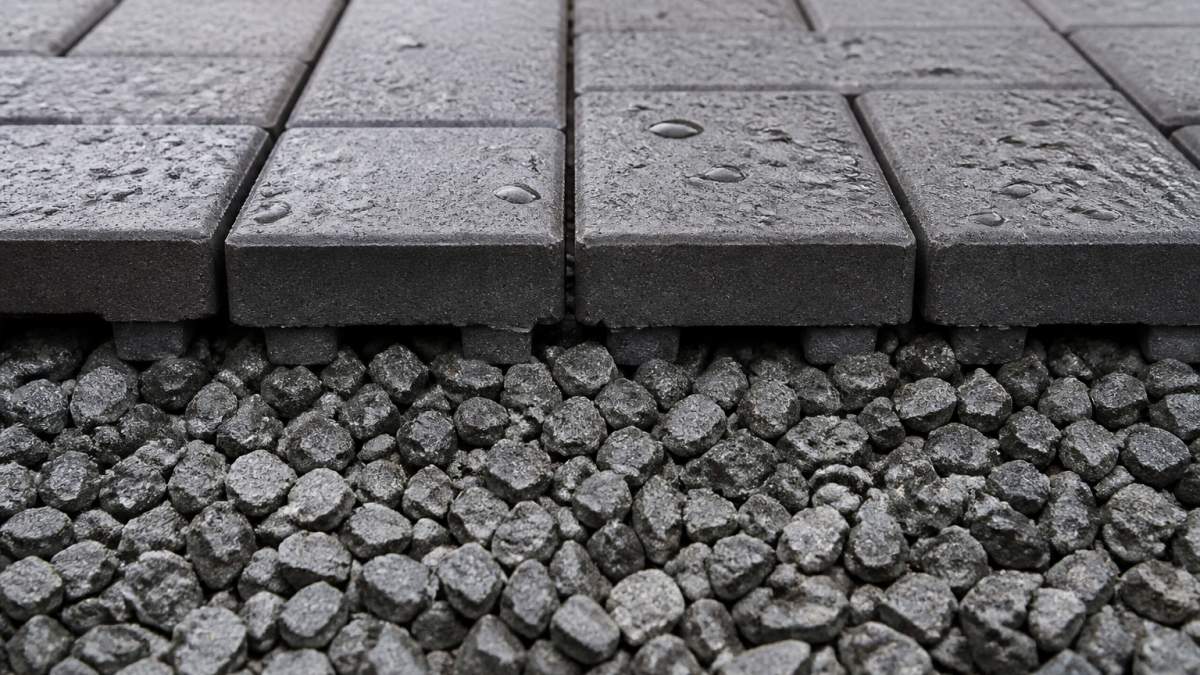
Ground conditions determine success. Clay soils drain slowly, so permeable paving on clay may need additional drainage infrastructure. Sandy or well-draining soils work better with simpler systems.
Permeable Paving vs Traditional Paving
Performance and Durability
Traditional solid paving, tarmac or solid concrete blocks, sheds all water immediately. This creates rapid runoff but offers no on-site drainage benefit. The surface itself lasts well if properly installed, typically 15-20 years for block paving before settling or cracking occurs.
Permeable paving lifespan depends on material type and maintenance. Well-maintained permeable block paving lasts 15-20 years, similar to traditional systems. However, neglected permeable paving fails faster because clogged drainage causes surface damage.
Traditional paving handles heavy vehicles equally well, whether cars or delivery lorries. Permeable paving can also support vehicle weight, but the base design must account for load-bearing. Thicker stone bases are often needed for commercial or heavy-use driveways.
Freeze-thaw damage affects both types, but differently. Traditional paving cracks when water trapped beneath expands during frost. Permeable paving drains water away, reducing this risk, but poorly installed permeable systems with inadequate drainage suffer the same problem.
Staining and discolouration occur with both. Moss and algae grow on permeable surfaces more readily because moisture persists longer. Traditional paving stays drier and resists biological growth better.
Installation and Preparation
Traditional paving requires solid ground preparation: compacted sub-base, often with a membrane to prevent weeds. The focus is on creating a level, stable platform.
Permeable paving demands precision in base layer design. Stone depths must match rainfall expectations and soil drainage rates. Getting this wrong means the system fails within months. Professional design matters.
Installation time can be similar, but permeable work requires more skilled labour. The installer must understand drainage principles, not just laying blocks. This expertise costs more.
Ground investigation helps both approaches. For permeable paving, it’s essential, you need to know your soil type and drainage rate before designing the system. Traditional paving benefits from investigation too, but works on poorer ground more reliably.
Permeable Driveway Lifespan and Maintenance
A properly installed permeable driveway lasts 15-20 years, matching traditional paving. The difference lies in what happens during that time.
Maintenance starts in year one. Debris accumulates in the pores. Leaves, dirt, and dust block drainage.
Jet washing removes surface debris but risks damaging the porous material if done incorrectly. Specialist cleaning equipment designed for permeable surfaces works better.
Weeds can grow through permeable surfaces more easily than traditional paving. The porous structure allows seeds to settle and germinate.
Resealing or resin application may extend life on some permeable materials. Resin-bound systems sometimes benefit from refreshing after 7-10 years. Block paving systems rarely need resealing if drainage remains clear.
Heavy staining occurs gradually. Permeable surfaces show dirt and algae growth more visibly than sealed traditional paving. This is aesthetic rather than functional, the surface still works, but looks weathered.
Repairs follow different rules. A cracked traditional block simply gets replaced. A permeable block failure might indicate drainage problems in the base layer, requiring investigation before replacement.
Is Permeable Paving Worth It for Your Property?
When Permeable Paving Makes Sense
Permeable paving suits properties where water management matters. If your driveway slopes toward your house or neighbouring properties, draining water away on-site prevents flooding and disputes.
Properties in areas prone to surface water flooding benefit from permeable systems. The on-site drainage reduces pressure on overwhelmed local systems and protects your own ground.
Environmental considerations appeal to many homeowners. If reducing runoff and supporting sustainable drainage matters to you, permeable paving aligns with those values.
Sites with good natural drainage work well with permeable paving. Sandy or well-draining soil makes the system simpler and cheaper. The water filters through naturally without needing complex additional infrastructure.
Larger properties often justify the investment. A 100-square-metre driveway makes the drainage benefits worthwhile. Smaller driveways see less benefit from permeable systems.
Commercial properties and developments increasingly choose permeable paving to meet planning requirements. Many local authorities now require sustainable drainage on new commercial work. Permeable paving satisfies these regulations.
When Traditional Paving May Be Better
Budget constraints favour traditional paving. Upfront costs are lower. If you’re not concerned about on-site drainage, traditional solid paving offers better value.
High-maintenance concerns suggest traditional paving. If you won’t commit to regular cleaning, permeable paving will fail. Traditional paving needs less attention.
Heavy commercial use or frequent large vehicle access works better with traditional paving. Whilst permeable systems handle vehicles, traditional paving is stronger and forgiving.
Poor soil drainage complicates permeable paving. Clay-heavy ground requires expensive additional drainage infrastructure. Traditional paving works on any ground without modification.
Properties where water runoff isn’t a problem don’t need permeable benefits. If your driveway drains naturally away from buildings and neighbours, traditional paving meets your needs at lower cost.
Tight timescales favour traditional paving. Installation is faster and simpler. Permeable work requires design work and careful base preparation, taking longer overall.
Conclusion
Permeable driveway paving works well on the right sites with committed maintenance. It solves real water management problems and supports sustainable drainage. However, it demands more upfront investment, careful installation, and ongoing care than traditional alternatives.
The decision hinges on three factors: your site conditions, your budget, and your maintenance commitment. If your property floods, your soil drains well, and you value environmental benefits, permeable paving is worth considering. If budget is tight, soil drains poorly, or you prefer low-maintenance solutions, traditional paving likely suits you better.
At Finescape Landscaping & Paving Ltd, we design and install both permeable and traditional driveway systems. Our team assesses your site, discusses water management needs, and recommends the best approach for your property. Whether you’re managing surface water issues on a country home or building sustainable drainage into a new development, we handle the design, groundworks, and installation to ensure your driveway functions properly for years to come. Contact us today to discuss your driveway project and find the right paving solution for your needs.
Frequently Asked Questions
What are the main advantages of permeable driveway paving?
Permeable driveway paving reduces surface water runoff, which helps prevent flooding and supports local drainage systems. It allows rainwater to filter through to the ground, recharging groundwater and reducing strain on public sewers. The material also reduces heat island effects compared to solid asphalt or concrete, keeping surrounding areas cooler. Many properties benefit from improved aesthetics, as permeable options come in varied finishes and colours. Environmental benefits make it attractive for homeowners seeking sustainable solutions.
How long does permeable driveway paving typically last?
Permeable driveway paving generally lasts 15 to 20 years with proper installation and maintenance, though some systems perform longer depending on traffic, climate, and care. The lifespan depends heavily on the base preparation, inadequate groundwork shortens durability significantly. Professional installation with correct drainage design is crucial for achieving the full expected lifespan.
How does permeable paving compare with traditional driveway paving?
Permeable paving allows water to drain through, whereas traditional asphalt or concrete creates a solid, impermeable surface that sheds water. Traditional paving typically costs less upfront and requires less specialised installation, but permeable options offer environmental and drainage advantages. Traditional paving is often more straightforward to repair, while permeable systems require specific maintenance routines. For properties with drainage concerns or environmental priorities, permeable paving offers distinct benefits, though traditional options may suit simpler applications and tighter budgets.
Can permeable paving be installed on clay soil or sloping driveways?
Permeable paving on clay soil is challenging because clay drains poorly, potentially causing water to pool beneath the surface rather than drain away. Professional assessment is essential to determine whether drainage improvements or alternative solutions are needed. Sloping driveways can work with permeable paving if the slope is moderate and the base system is designed to manage water flow. Steep slopes may direct water too quickly, reducing infiltration benefits. A qualified installer should evaluate your specific soil type and gradient before recommending permeable paving.
