
Last Updated: November 8, 2026
Quick Summary
For porcelain and natural stone patio slabs, a mortar bed is the more reliable choice, as it gives a rigid, stable base. A sand bed can work for lighter, individual slabs in occasional-use areas, but slabs may shift over time.
- Beatsons recommends a 4:1 sharp sand to cement mortar mix for porcelain slabs.
- Sand beds are quicker and simpler, and let you adjust slab height with a rubber mallet.
- Sand beds can let weeds take root in the gaps between slabs.
- Mortar beds are harder to adjust once set, so levels must be checked before it hardens.
- Full, continuous contact is essential, as air gaps leave slabs unsupported.
Table of Contents
- Sand or Cement Bedding: The Short Answer
- The Pros and Cons of Laying Patio Slabs on Sand
- The Pros and Cons of Laying Patio Slabs on Mortar
- How Thick Should a Mortar Bed Be for Paving?
- Step-by-Step: How to Lay Patio Slabs on Mortar
- Getting the Drainage Fall Right
- Choosing the Right Base for Your Patio Project
- Frequently Asked Questions
Sand or Cement Bedding: The Short Answer
For porcelain and natural stone slabs laid on a patio, a mortar bed is the more reliable choice, while a sand bed can work for some lighter, individual slabs. Beatsons recommends a 4:1 sharp-sand-to-cement mortar mix for porcelain slabs, with a full bed and no air gaps, to help prevent frost cracking (Beatsons guidance on laying porcelain slabs on sand vs concrete).
Check the manufacturer’s fixing instructions before you decide, as they often set out the bedding method for their product. The rest of this guide explains the trade-offs so you can make the call with your own patio in mind. For a wider look at what goes beneath paving, see our UK base guide for paving slabs.
The article sets out how the two bedding methods compare, as summarised below.
| Bedding method | Best for | Key difference |
|---|---|---|
| Sand bed | Lighter, occasional-use areas | Quicker and simpler; slabs can shift over time |
| Mortar bed | Porcelain and natural stone; regular wear | Rigid and stable; harder to adjust once set |
| Sand bed | Easy height adjustment | Water drains through the joints |
| Mortar bed | Firm hold under foot and furniture | Needs drainage fall managed through the surface |
The Pros and Cons of Laying Patio Slabs on Sand
A sand bed is quicker and simpler to set up. It also lets you adjust a slab’s height easily by tapping it with a rubber mallet, and it lets water drain through the joints.
The weak points are real, though:
- Movement: Slabs can shift or rock over time, especially under foot traffic or heavy garden furniture.
- Weeds: Gaps between slabs can let weeds and grass take root.
- Uneven settling: Without a rigid bed, some slabs can sink or tilt.
A sand bed is generally better suited to lighter, occasional-use areas than to a patio that takes a lot of wear.
The Pros and Cons of Laying Patio Slabs on Mortar
A mortar bed gives a rigid, stable base. Slabs are less likely to move, and the bed holds the slab firmly under foot and furniture.
The trade-offs:
- More work: Mixing and laying mortar takes more time and skill than spreading sand.
- Harder to adjust: Once the mortar sets, correcting a slab’s level is difficult.
- Less drainage: A solid bed means water must be managed through the fall of the surface.
Full, continuous contact matters, as a bed with air gaps can leave slabs unsupported.
How Thick Should a Mortar Bed Be for Paving?
A mortar bed should be thick enough to give the slab full, even support without leaving air pockets. The exact depth depends on the slab size, the thickness of the slab and the sub-base beneath it, so check the slab maker’s specification and your sub-base preparation before setting the depth.
Use a spirit level and a straight edge while you work to keep the surface true. If you are unsure, a professional landscaper can confirm the right depth for your site. You can read more about preparing the layer beneath the bedding in our step-by-step sub-base guide.
Step-by-Step: How to Lay Patio Slabs on Mortar
!Two workers levelling a porcelain slab on a fresh mortar bed in a sunlit garden
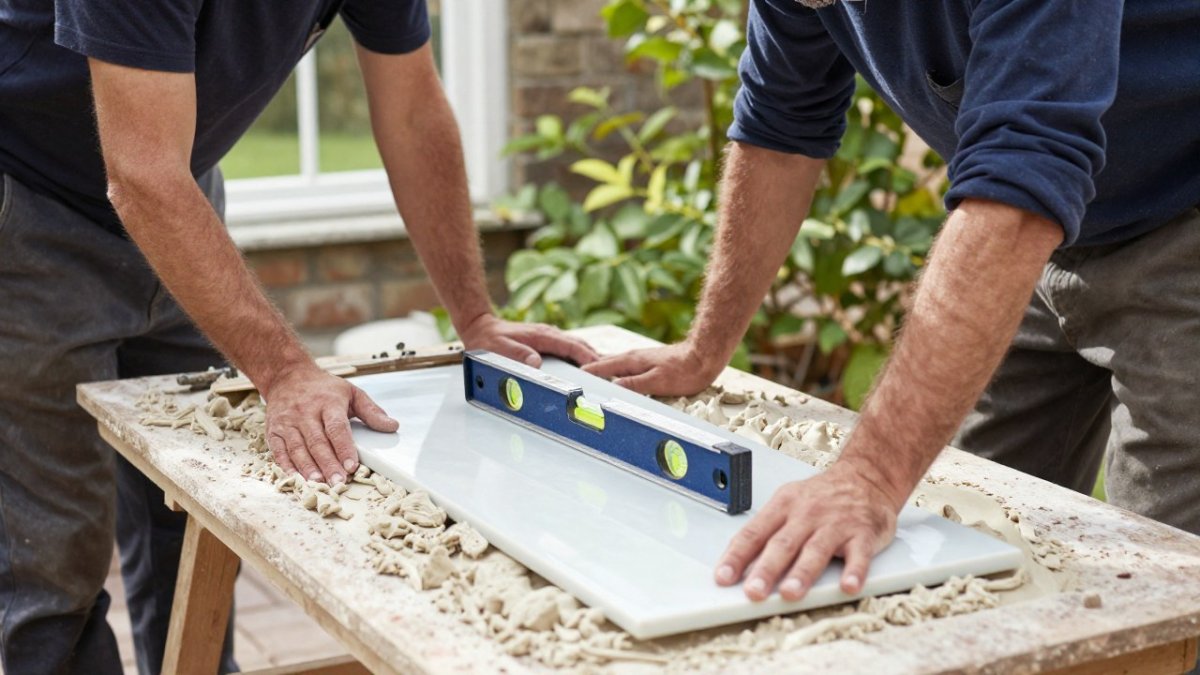
Work through these steps in order:
- Prepare the sub-base. Make sure it is compacted, level and firm.
- Mix the mortar. Use a 4:1 sharp sand to cement mix, as Beatsons recommends for porcelain.
- Spread a full bed. Cover the area with mortar so there are no air gaps underneath.
- Lay the slab. Press it firmly into the mortar and tap it down.
- Check the level. Use a spirit level in both directions before the mortar sets.
- Fill the joints. Once set, use a suitable jointing compound.
Work in small sections so the mortar does not dry out before the slab goes down.
Getting the Drainage Fall Right
Water must run off the patio, not pool on it or drain towards the house (Guidance on the permeable surfacing of front gardens). A gentle fall is needed so water runs off the surface. Set your levels before you lay the slabs, and check the fall as you go.
Good drainage protects the bed and helps stop standing water from freezing, which is especially important with a mortar base.
Choosing the Right Base for Your Patio Project
Choose sand if you have lighter, occasional use, want a simple job and accept some maintenance. Choose mortar if the patio will take regular wear, you want a stable surface and you are prepared to put in the extra work.
If you would rather not do the job yourself, a professional team can assess your site and recommend the right base. Finescape Landscaping & Paving Ltd undertakes patio and driveway installations, and you can find out more about patio and driveway installations, or visit our expert landscaping advice hub for more guidance.
BUTTON: Plan Your Patio
CARD_TITLE: Sand or mortar for your patio?
CARD_TEXT: Finescape Landscaping & Paving Ltd lays patios on the right base for your site.
Frequently Asked Questions
Is it better to lay patio slabs on sand or mortar?
For most patios that will take foot traffic over many years, a mortar bed is the more durable choice. It holds each slab firmly, which reduces rocking and the movement that lets weeds grow between joints. Sand bedding can work for light use on well-drained ground, and it is easier to lift and re-lay later. The right answer depends on the slab type, how the patio will be used, and how much movement you are prepared to accept over time. Porcelain paving in particular is usually recommended on mortar, because a full, gap-free bed helps prevent frost cracking.
Can you lay paving slabs directly on sand?
Yes, slabs can be laid on sand, but it is best suited to lighter use and to slabs of a consistent thickness. Sand-bedded patios are more likely to shift, rock underfoot and let weeds establish in the joints, particularly where the base is not well compacted. A sub-base of compacted Type 1 is still needed beneath the sand. If you want the patio to stay flat for years, a mortar bed is usually the safer option.
How thick should a mortar bed be for paving?
A mortar bed for paving is typically laid to a depth that lets the slab sit fully supported with no hollow spots, so the bed must be level and continuous. A 4:1 sharp-sand-to-cement mix and a full bed without air gaps are commonly used, as gaps can leave slabs unsupported. The exact depth depends on the slab thickness and the levels of the sub-base, so check the manufacturer’s guidance for your product before you start.

