
Last Updated: 25 October 2026
Quick Summary
Driveway paving ideas include block paving for versatile design, natural stone for timeless appeal, and permeable surfaces for sustainable drainage. The right choice depends on your home’s style, drainage needs, slope and budget, with proper ground preparation essential for any option to perform well.
- Block paving offers countless patterns and colours, with individual blocks replaceable if damaged
- Natural stone develops character with age and provides superior grip in wet conditions
- Permeable paving reduces flooding risk and supports sustainable drainage by allowing water to filter into the ground
- Steep driveways require textured or riven finishes to provide adequate traction when wet
- Ground preparation with a compacted 100-150mm hardcore base is critical to prevent cracking and uneven surfaces
Table of Contents
- Why Your Driveway Paving Choice Matters
- Block Paving Driveway Ideas for Versatile Design
- Natural Stone Driveway Paving for Timeless Appeal
- Permeable Driveway Paving for Drainage and Sustainability
- Steep Driveway Traction: Materials and Finishes That Work
- Ground Preparation: The Foundation of Every Driveway
- Planning Your Driveway Paving Project
- Frequently Asked Questions
Why Your Driveway Paving Choice Matters
Your driveway is the first thing visitors see. It shapes how people perceive your home before they even reach the front door. The right driveway paving ideas transform an ordinary entrance into a striking feature that adds value and character to your property.
Finescape Landscaping & Paving Ltd helps homeowners across the region select paving materials that balance aesthetics, durability and practicality. The choice between block paving, natural stone, permeable surfaces and other options isn’t just about appearance, it affects how your driveway performs in wet weather, how long it lasts, and how much maintenance it requires.
This guide explores five proven driveway paving ideas that work well in UK gardens. Each option has distinct advantages and limitations. Understanding these differences helps you choose the material and design that suits your home, budget and lifestyle.
Block Paving Driveway Ideas for Versatile Design
Block paving remains one of the most popular choices for UK driveways. It offers flexibility in design, colour and pattern that few other materials match.
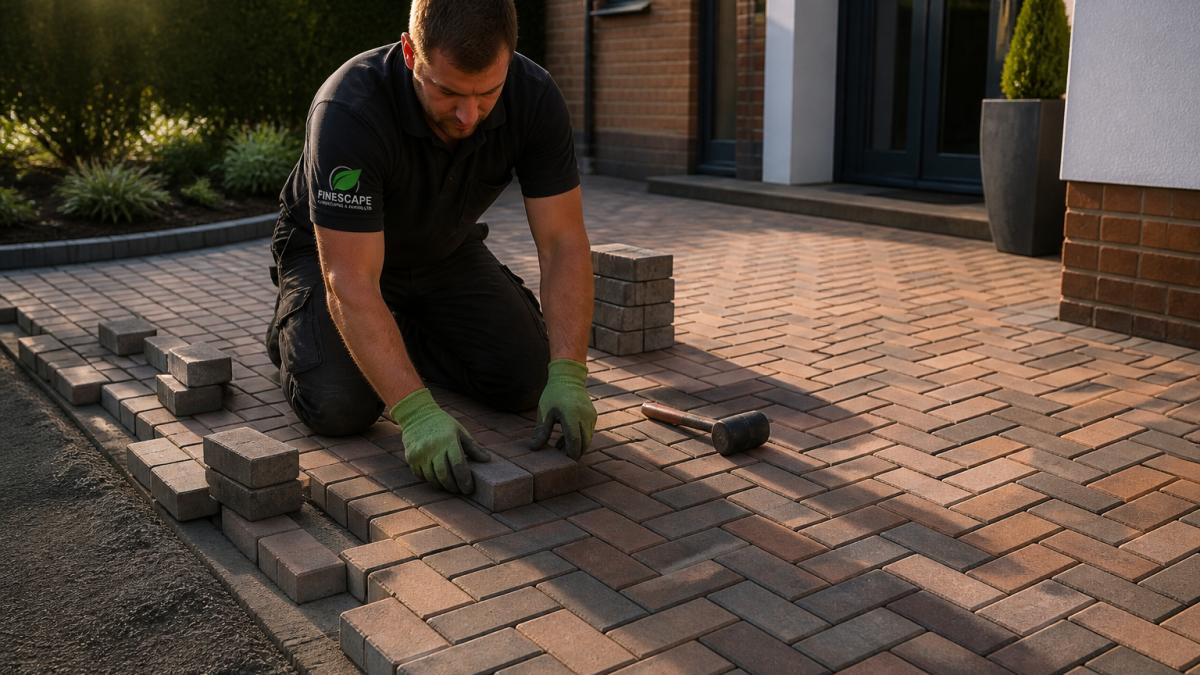
Block paving works well because you can arrange individual blocks in countless patterns. Herringbone layouts create visual interest. Stretcher bond patterns feel more formal. Mixed colours add character without looking chaotic.
The material suits both traditional and contemporary homes. Warm terracotta tones complement period properties. Cool greys and blacks suit modern architecture. You can even combine multiple colours to create borders or focal points.
Common advantages include:
- Easy to repair, replace individual blocks if one cracks
- Wide range of colours and finishes available
- Permeable options reduce surface water runoff
- Relatively quick installation compared to some alternatives
- Works on sloped driveways with proper base preparation
The main limitations are:
- Weeds can grow between blocks over time
- Surface can become uneven after several years if the base shifts
- Requires a solid foundation to prevent movement
- Regular maintenance keeps it looking its best
Block paving can last for many years with proper installation and care. The longevity depends heavily on ground preparation.
Block paving offers distinct advantages and limitations worth understanding before you commit to this popular choice.
| Aspect | Advantages | Limitations |
|---|---|---|
| Repair and replacement | Individual blocks can be replaced if one cracks | Surface can become uneven if base shifts |
| Design flexibility | Countless patterns, colours and finishes available | Weeds can grow between blocks over time |
| Installation | Relatively quick compared to some alternatives | Requires solid foundation to prevent movement |
| Drainage | Permeable options reduce surface water runoff | Regular maintenance keeps it looking its best |
| Suitability | Works on sloped driveways with proper preparation | Longevity depends heavily on ground preparation |
Natural Stone Driveway Paving for Timeless Appeal
Natural stone conveys permanence and quality. Granite, sandstone and slate create driveways that age gracefully and develop character over time.
Natural stone driveway paving suits period homes and properties where you want a premium aesthetic. The material weathers beautifully, slight colour variation and weathering patterns add authenticity rather than detract from it.
Granite is exceptionally hard and resists wear. Sandstone offers warmer tones. Slate provides a contemporary look with natural cleft surfaces that improve grip.
Strengths of natural stone include:
- Exceptional durability
- Develops patina and character with age
- Superior grip in wet conditions compared to smooth paving
- Timeless aesthetic that suits most architectural styles
- High perceived value adds to property appeal
Considerations before choosing natural stone:
- Higher initial cost than block paving
- Requires professional installation, cutting and laying is specialist work
- Some stones need periodic sealing to maintain appearance
- Moss and algae can develop on shaded areas
- Uneven surfaces can be challenging for wheeled bins or mobility aids
Natural stone demands respect during installation. Poor base preparation or inadequate drainage can cause cracking. This is why professional contractors matter, they understand how stone moves and settles.
Permeable Driveway Paving for Drainage and Sustainability
Permeable paving allows water to drain through the surface rather than running off into gutters and drains (Permeable surfacing of front gardens: guidance). This approach solves real problems in UK gardens where heavy rainfall overwhelms traditional drainage.
Permeable driveway paving reduces flooding risk on your property and in surrounding areas. Water soaks through the surface into a gravel base, where it filters into the ground. This mimics natural drainage patterns and reduces pressure on public sewers during storms.
The environmental benefit is significant. Permeable surfaces recharge groundwater instead of channelling rainfall into storm drains. They reduce the urban heat island effect, water evaporating from the base keeps the surface cooler than solid paving.
Permeable options include:
- Permeable block paving with open joints
- Resin-bound gravel surfaces
- Porous asphalt
- Gravel in reinforced grids
Benefits of choosing permeable surfaces:
- Reduces surface water flooding on your property
- Environmentally responsible, supports sustainable drainage
- Can qualify for planning permission relaxation in some areas
- Cooler surface temperature in summer
- Cleaner appearance, water drains away rather than pooling
Challenges to consider:
- Initial cost can be higher than standard paving
- Requires specialist installation to ensure drainage works properly
- Weeds can grow through some permeable surfaces
- Regular maintenance prevents algae buildup
- Not suitable for all soil types, clay soils may not drain adequately
For permeable paving to work, the base layer must be correctly constructed. Poor preparation causes the surface to become waterlogged or unstable. This is why Is Permeable Driveway Paving Worth It? deserves careful consideration before committing.
Steep Driveway Traction: Materials and Finishes That Work
Sloped driveways present specific challenges. Rain and frost create hazardous conditions on smooth surfaces. Vehicle grip matters for safety and practicality.
Steep driveway traction depends on surface texture and material choice. Smooth finishes, polished stone or sealed asphalt, become dangerously slippery when wet. Textured surfaces grip far better.
Textured block paving with riven (split) faces provides excellent grip. Natural stone with cleft surfaces offers similar benefits. Resin-bound gravel with exposed aggregate improves traction significantly.
If your driveway slopes noticeably, prioritise:
- Riven or textured block finishes
- Natural stone with cleft surfaces
- Resin-bound gravel with adequate aggregate exposure
- Avoiding polished or smooth finishes
Material selection alone doesn’t guarantee safety on steep driveways. The base must be solid. If the foundation shifts or settles unevenly, even textured paving becomes treacherous. This is where 5 Best Driveway Materials for Sloped Gardens provides specific guidance for challenging gradients.
Proper drainage matters on sloped driveways. Water running down the slope can undermine the base if not managed correctly. Cross-falls and channels direct water safely away.
Ground Preparation: The Foundation of Every Driveway
This is where most driveway problems begin. Poor ground preparation leads to cracking, sinking, and uneven surfaces within a few years.
Driveway paving ideas only work if the foundation is sound. The base layer, typically 100-150mm of compacted hardcore, must be level and well-drained. Soft ground, poor drainage, or inadequate compaction causes failure.
The preparation process involves:
- Removing existing surface and loose material
- Assessing soil type and drainage characteristics
- Excavating to the correct depth
- Installing a compacted hardcore base
- Adding a sand or mortar layer for the final surface
- Ensuring cross-falls for water drainage
Common mistakes include:
- Insufficient base depth on clay or soft soils
- Poor compaction of the hardcore layer
- Inadequate drainage provision
- Laying paving directly on soil without a base
- Ignoring existing drainage problems
What to Put Under Paving Slabs: UK Base Guide 2026 covers foundation preparation in detail. The depth and type of base depend on soil conditions, expected traffic, and material choice.
Ground preparation is a significant part of the total project. A properly prepared base lasts for many years. Poor preparation can create problems quickly.
Planning Your Driveway Paving Project
Before selecting materials, assess your specific situation. Different driveways have different needs.
Consider these factors:
- Drainage: Does water pool on your current driveway? Is the soil clay or well-draining?
- Slope: Is the driveway level or noticeably sloped?
- Traffic: Is it a family car or commercial vehicle access?
- Aesthetic: What style complements your home?
- Maintenance: How much upkeep are you willing to do?
- Budget: Materials and labour vary significantly
Sketch your driveway layout. Note dimensions, slope direction, and any existing drainage issues. Take photos of the current surface. This information helps contractors provide accurate quotes and recommendations.
Get multiple quotes from established contractors. Ask about their base preparation process, this reveals their approach to quality. Request references from recent projects. Visit completed driveways if possible to see how materials have weathered.
The best time to plan a new driveway is before you need emergency repairs. A well-designed driveway with proper foundations can last for many years depending on material choice. Patio & Driveway Installations Newbury offers specialist guidance for your specific location and soil conditions.
Your driveway entrance deserves careful planning. The right material and proper installation create a feature that enhances your home’s appearance and functions reliably for decades. Finescape Landscaping & Paving Ltd specialises in driveway design and installation across the region. We handle ground preparation, material selection, and construction to ensure your new driveway performs as well as it looks. Get in touch to discuss your driveway project and explore which paving ideas suit your home best.
Frequently Asked Questions
What is the best paving for a driveway?
The best driveway paving ideas depend on your property style, budget, and climate. Block paving offers flexibility and traditional appeal. Natural stone delivers elegance and durability. Permeable options suit modern homes and meet drainage requirements. Consider traction needs on sloping driveways, textured finishes and certain materials grip better. Professional ground preparation determines longevity regardless of material choice.
How do you prepare the ground for driveway paving?
Proper ground preparation prevents cracking and sinking. Remove existing surface and vegetation, excavate to correct depth, install a robust sub-base layer (typically 100-150 mm of compacted stone), add a sand or mortar bed, then lay paving. Compaction at each stage is essential. Poor preparation causes the failures you see in neighbouring properties. Professional contractors ensure each layer meets specification.
What driveway paving allows water to drain through?
Permeable driveway paving includes porous asphalt, recycled plastic grids with gravel, and permeable block systems. These allow rainfall to drain through rather than pooling. They reduce flooding risk, recharge groundwater, and often meet local planning requirements. Natural stone and block paving can be laid with permeable joints using specialist bedding, combining traditional aesthetics with modern drainage performance.
How can you improve traction on a steep driveway?
Steep driveway traction improves with textured finishes and grippy materials. Riven or brushed natural stone, rough-faced block paving, and open-textured asphalt all reduce slip risk. Avoid polished or smooth surfaces on slopes. Permeable blocks often have superior grip. Correct drainage prevents water pooling, which worsens slipperiness. Professional installation ensures surface slope directs water safely away.

