
Last Updated: November 10, 2026
Quick Summary
Clean porcelain paving slabs gently with a pH-neutral cleaner, a soft brush and clean water, avoiding vinegar, acid-based products, wire brushes and high-pressure jets. Sweep off grit first, protect nearby plants, and test any product on a small hidden area before cleaning the whole patio.
- Sweep away grit first, as it scratches porcelain when you start scrubbing.
- Use a pH-neutral cleaner suitable for porcelain or outdoor tiles, diluted as directed.
- Avoid vinegar and acid-based products, which can etch the surface and wear jointing.
- Scrub gently with a soft-bristled brush and never use wire brushes or steel pads.
- If using a pressure washer, keep it on a low setting with a wide nozzle, away from joints.
Table of Contents
- Why Porcelain Paving Slabs Need Gentle Cleaning
- Preparing the Patio: Clearing Debris and Protecting Plants
- Choosing a pH-Neutral Cleaner for Porcelain Patio Surfaces
- Removing Black Spots from Porcelain Paving Without Scratching
- Pressure Washing Porcelain Patio Settings: Safe Pressure and Technique
- Troubleshooting Grout Lines, Efflorescence and Accidental Damage
- Booking Professional Patio Restoration With Finescape
- Frequently Asked Questions
Why Porcelain Paving Slabs Need Gentle Cleaning
Porcelain paving slabs are one of the most durable surfaces you can put in a garden, but they are not indestructible. The wrong cleaner, a harsh scrub or too much pressure can dull the finish, scratch the surface and loosen the jointing. Over-aggressive cleaning often does more damage than the dirt itself.
Gentle cleaning protects the surface and the joints. It keeps the patio looking good for years rather than months.
- Scratches from grit and abrasive brushes dull the glaze
- Acidic cleaners can etch the surface and wear down the jointing
- High-pressure jets can force water and debris into joints and under edges
Preparing the Patio: Clearing Debris and Protecting Plants
Start by clearing the patio of loose debris. Sweep away leaves, grit and soil with a stiff broom. Grit left on the surface is what scratches porcelain when you start scrubbing, so removing it first matters.
Then protect what grows around the patio. Cover nearby plants, shrubs and lawn edges with a sheet or old cloth before you apply any cleaner. Rinse off any overspray straight away.
- Sweep the whole area to remove dry grit
- Remove weeds from the joints by hand where possible
- Cover plants and soft edges before applying any product
- Wet the surface with clean water before you start
Choosing a pH-Neutral Cleaner for Porcelain Patio Surfaces
A pH-neutral cleaner is the safest everyday choice for porcelain. It removes dirt and grime without attacking the surface or the grout. Industry advice generally warns against vinegar and acid-based products.
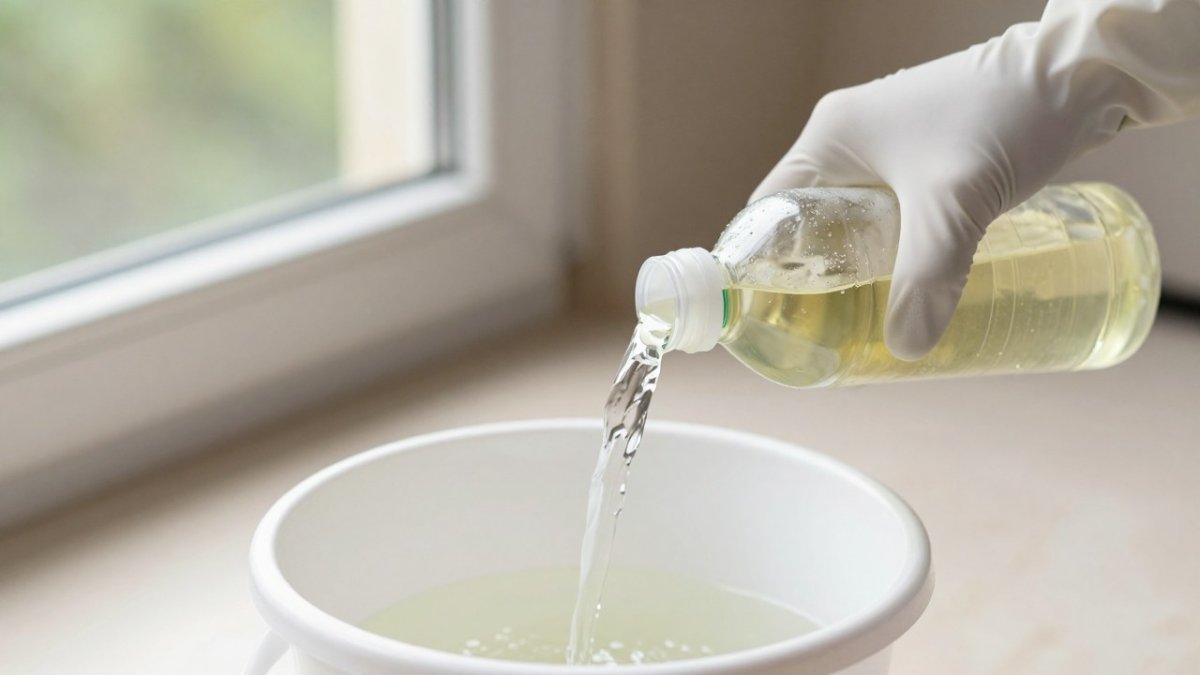
Look for a cleaner labelled as suitable for porcelain or outdoor tiles, and read the label before you buy. Dilute it as directed and test a small hidden area first.
Watch out: Do not mix cleaners. Combining products can create harmful fumes and leave residues that are hard to rinse away.
!Hands in gloves pouring a mild cleaning solution from a plastic bottle into a bucket beside a clean porcelain patio
The table below sets out the cleaner choices the article covers and the points to check before using each one.
| Option | Best for | Key difference |
|---|---|---|
| pH-neutral cleaner | Everyday dirt and grime | Safe for porcelain and grout |
| Vinegar or acid-based product | Not recommended | Can etch the surface and wear jointing |
| Black spot and algae remover | Shaded or damp patios | Made for organic growth on outdoor porcelain |
| Rust cleaner | Stubborn rust stains | Use sparingly and rinse off quickly |
Removing Black Spots from Porcelain Paving Without Scratching
Black spot and algae are common on shaded or damp patios. Apply a dedicated black spot and algae remover, following the instructions on the label. A plastic watering can gives you even, controlled application without splashing.
Let the product sit for the recommended time, then agitate gently with a soft-bristled brush. Avoid wire brushes and steel pads, which leave marks on the surface. Rinse thoroughly with clean water.
- Use a product made for organic growth on outdoor porcelain
- Apply with a plastic watering can for an even coat
- Scrub gently with a soft-bristled brush
- Rinse fully so no residue dries on the surface
Stubborn rust stains need a specific rust cleaner, used sparingly and rinsed off quickly.
Pressure Washing Porcelain Patio Settings: Safe Pressure and Technique
Pressure washing is the fastest way to clean a large porcelain patio, but it is also the step most likely to cause permanent damage. Porcelain is a dense, low-porosity product with a glazed or micro-textured face, and the jointing between slabs is softer than the slab itself.
Porcelain generally does not need high pressure. Where a pressure washer is used, it is best treated as a rinse tool rather than a cleaning tool: loosen the dirt with a pH-neutral detergent and a soft brush, then use the machine only to wash the residue away.
If you are going to use one, work to these settings:
- Pressure: keep the machine at its lowest usable setting. On a domestic machine this usually means the low-pressure lance or a variable-pressure nozzle set to its gentlest position, not the narrow red or yellow tip.
- Nozzle: use a wide fan tip, 40 degrees or wider, or a rotary surface cleaner designed for delicate paving. Never use a pencil jet or a turbo nozzle on porcelain.
- Distance: hold the nozzle at least 300 mm from the surface and further back over joints. The further away you stand, the wider and gentler the fan becomes.
- Angle: keep the jet at about 45 degrees to the slab, not straight down. A perpendicular jet drives water into the joint and under the edge.
- Movement: keep the nozzle moving in steady overlapping passes. Holding it still in one spot is what etches the glaze and leaves a permanent stripe.
- Direction: work with the fall of the patio, not against it, so dirty water runs off rather than pooling at the joints.
Watch out: never aim the jet directly into a grout line or the open edge of a slab.
A few practical habits make the difference. Pre-wet the patio and the surrounding planting before you start, so detergent and dirty runoff do not soak into dry soil.
If the patio has been sealed, be especially cautious. A pressure washer can strip a penetrating or topical sealer in a single pass, and once the sealer is gone the slab is more vulnerable to staining.
Troubleshooting Grout Lines, Efflorescence and Accidental Damage
Most cleaning guides stop at ‘rinse and repeat’. The harder questions come afterwards: what do you do when a slab has already been scratched, when the jointing has started to fail, or when a white bloom keeps returning no matter how often you clean? This section covers the damage-control side that most guides leave out.
Scratches and scuff marks
Fine surface scratches from grit, a wire brush or a dragged pot usually show as a dull grey line against the glaze. Before reaching for a product, clean the area and let it dry fully, some marks are actually dried residue and lift with a pH-neutral cleaner and a soft brush. If the mark is a true scratch in the glaze, a specialist porcelain scratch remover or a fine polishing compound applied by hand with a soft pad can soften it, but it will not restore a factory finish. Deep scratches that catch a fingernail are best left alone or assessed by a professional; aggressive polishing on a glazed slab can make the area look worse than the scratch.
Chips and edge damage
Chips most often appear on slab edges and corners, usually from impact or from a pressure washer jet directed at the joint. Small chips can be filled with a colour-matched porcelain repair compound or a two-part epoxy filler, applied sparingly and smoothed flush before it sets. The repair will be visible on close inspection but stops water getting into the body of the slab. Larger chips, cracks running across a slab, or any slab that rocks underfoot point to a problem with the bedding or base rather than the surface, and that needs a professional assessment, cleaning will not fix movement. To understand the underlying movement, read our guide to preventing patio paving from sinking.
Grout lines that have darkened or crumbled
Darkened jointing is usually dirt, algae or a failed sealer rather than a problem with the grout itself. Clean it with a soft brush and a mild cleaner, working along the line rather than across it, and rinse well. Crumbling or hollow jointing is different: it means the joint has failed and water is getting in. Rake out the loose material, allow the joint to dry completely, and re-point with a jointing compound suitable for porcelain and for the joint width. Do not simply clean over a failing joint, it will keep coming back.
Efflorescence that keeps returning
Efflorescence is the white, powdery salt deposit that appears when moisture moves through the bedding and evaporates at the surface. Brush it off dry first, then clean with a suitable efflorescence remover and rinse well. If it returns repeatedly, the cause is water getting under the slabs, often a drainage, fall or jointing problem. Treating the symptom without addressing the water source is a cycle that never ends.
When to stop and call someone in
Some damage should not be DIY’d. Cracking across a slab, rocking slabs, sunken areas, jointing that fails repeatedly in the same place, or staining that returns after every clean all point to problems beneath the surface, the base, the bedding or the drainage. At that point the fix is a repair and possibly a rebuild of the affected area, not another cleaning product. A professional assessment of the base as well as the surface is usually the cheaper route in the long run. Our Porcelain & Natural Stone Paving team can assess the base and surface together and advise whether the area needs cleaning, repair or relaying.
Booking Professional Patio Restoration With Finescape
If you would rather not do this yourself, or your patio has heavy staining, cracked joints or movement, our team can help. Finescape Landscaping & Paving Ltd provides porcelain and natural stone paving and patio construction services.
For a patio that needs more than a clean, you can find our patio and driveway installation services in Newbury to see what we cover. If you are ready to talk through your project, contact us today to request a quote.
Frequently asked questions
Can I use a pressure washer on porcelain paving? Yes, but only on a low setting with a wide nozzle, keeping the jet away from the joints. Many people prefer gentle manual scrubbing to avoid damage.
What should I avoid when cleaning porcelain patio slabs? Avoid vinegar, acid-based cleaners, wire brushes and steel pads. These can etch the surface and leave scratches.
How often should porcelain patios be cleaned? Routine cleaning once or twice a year is usually enough for most gardens, with extra attention to shaded or damp areas.
Frequently Asked Questions
Can you use a pressure washer on porcelain paving?
Yes, a pressure washer can be used on porcelain paving if it is kept on a low setting and held at a safe distance, with a wide fan nozzle rather than a narrow jet. High pressure can erode the surface and force water and debris into the grout joints, which can loosen the jointing material over time. Work in long, even passes, keep the nozzle moving, and rinse thoroughly with clean water afterwards. If you are unsure of the surface condition or the jointing, a manual scrub with a soft brush and a pH-neutral detergent is the lower-risk option.
What is the best cleaning solution for outdoor porcelain tiles?
A pH-neutral cleaner designed for porcelain or stone is generally the safest choice for outdoor porcelain tiles. Mild detergents mixed with warm water also work well for routine cleaning. Avoid acidic products such as vinegar or hydrochloric acid, which can damage surfaces and grout. For organic growth such as black spot or algae, use a dedicated black spot and algae remover applied as directed on the label, then rinse well. Always test any product on a small hidden area first.
How do you remove stubborn stains from porcelain patio slabs?
Start by identifying the stain. Organic staining such as algae or black spot responds to a dedicated outdoor treatment, applied with a plastic watering can and left to work before rinsing. Rust stains need a specific rust remover, used sparingly and rinsed off promptly. Oily marks can be lifted with a mild detergent and a soft-bristled brush. Avoid wire brushes and abrasive pads, which can scratch the surface and leave the slab looking dull.
What should you avoid when cleaning porcelain paving?
Avoid acidic cleaners, wire brushes, abrasive scouring pads and high-pressure jets held close to the surface. Do not allow harsh chemicals to dry on the slabs, and never mix different cleaning products together. Sweep away loose grit before washing, as dry grit can scratch the surface when it is scrubbed. Finally, rinse thoroughly so no cleaning residue remains on the paving or in the joints.

