
Last Updated: October 26, 2026
Quick Summary
The 7 best paving materials for small garden patios are porcelain paving, slate, sandstone, limestone, concrete pavers, block paving, and large-format slabs. Each material solves different problems: porcelain and slate offer durability and minimal maintenance, whilst natural stone brings character and warmth. Your choice depends on your garden style, how you’ll use the space, and your priorities between aesthetics, durability, and maintenance.
- Large-format slabs of 600mm × 600mm or larger make small patios feel more spacious by creating fewer visual divisions.
- Porcelain paving is non-porous and frost-resistant, making it ideal for UK winters and low-maintenance gardens.
- Slate develops a silvery patina over time and works particularly well in small spaces because dark grey tones anchor the garden visually.
- Proper sub-base preparation and compaction is the single most important factor determining whether your patio succeeds or fails.
- Smaller paving units like 100mm × 200mm create visual interest through patterns and can make compact spaces feel larger if designed thoughtfully.
Table of Contents
- Why Paving Material Matters for Small Garden Patios
- Porcelain Paving for Small Patios
- Natural Stone: Slate, Sandstone and Limestone
- Concrete Pavers and Block Paving
- Patio Slab Sizes for Small Gardens
- Small Patio Paving Ideas: Patterns and Layouts
- Small Patio Drainage Solutions
- Choosing and Installing Your Small Patio
- Frequently Asked Questions
Why Paving Material Matters for Small Garden Patios
Selecting the right paving material for a small garden patio is one of the most important decisions you’ll make during a garden transformation. The material you choose affects not just how your patio looks, but how long it lasts, how much maintenance it requires, and whether it’ll feel cramped or open. Small spaces demand smarter choices than larger gardens because every square metre is more visible and more heavily used.
Homeowners often pick materials based on aesthetics alone, then discover too late that the material doesn’t suit their climate, their soil conditions, or their budget for proper installation. The 7 best paving materials for small garden patios each solve different problems. Some excel at making tight spaces feel larger. Others prioritise durability or ease of maintenance. Understanding which material matches your actual needs, not just your Pinterest inspiration board, is what separates a patio that delights you for 20 years from one that disappoints within five.
The foundation matters as much as the surface. Poor sub-base preparation is the single biggest reason patios fail, yet it’s invisible. You won’t see it when the job is done, which is precisely why cutting corners there is so tempting and so costly.
Porcelain Paving for Small Patios
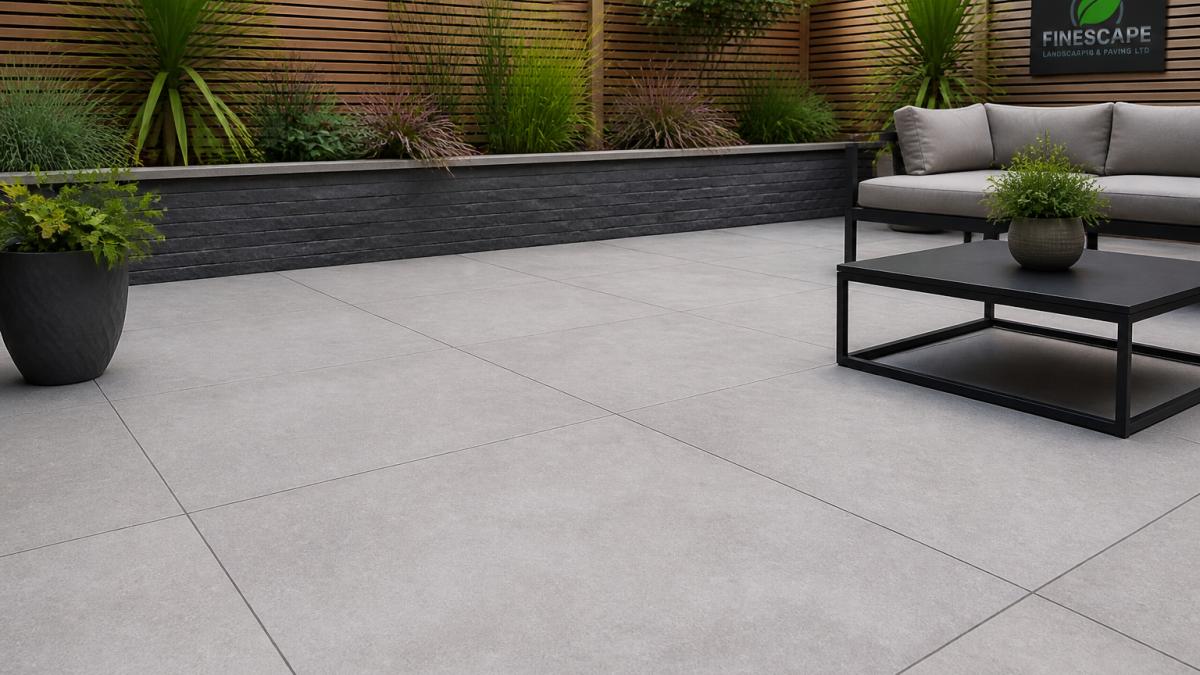
Porcelain paving has become the material of choice for small contemporary gardens, and for good reason. These large-format tiles create clean lines and minimal grout joints, which makes compact spaces feel more expansive.
Porcelain tiles are engineered to be non-porous, which means they resist frost, salt, and moisture far better than natural stone. They don’t absorb water, so they won’t crack when temperatures drop below freezing. This matters enormously in UK winters.
The aesthetic range is substantial. Modern porcelain comes in finishes that mimic natural stone, wood, concrete, or solid contemporary colours.
Installation requires precision. Porcelain tiles are heavier than natural stone, and they demand a perfectly level sub-base. Any deviation shows immediately as rocking or lippage (uneven grout lines). This is where professional installation separates success from failure.
The main drawback is cost. Porcelain paving materials themselves can be more expensive than some alternatives, and installation labour is higher because the work must be precise.
Natural Stone: Slate, Sandstone and Limestone
Natural stone brings character that engineered materials struggle to match. Each piece is unique, subtle colour variations, natural texture, the sense that the patio has history.
Slate is the densest and hardest natural stone commonly used for patios. It splits naturally into thin, flat pieces, which makes it ideal for creating clean-edged paving. Slate is frost-resistant and weathers beautifully, developing a silvery patina over time.
Sandstone and limestone are softer and more porous than slate. They’re warmer in colour, honey, buff, cream, which can make a small patio feel more intimate. The trade-off is that they require sealing to protect against staining and frost damage.
Natural stone demands proper sub-base preparation just as much as porcelain. The difference is that natural stone is thicker and heavier, which means the ground beneath must be compacted to prevent settling.
The cost of natural stone varies depending on the type and source. Locally sourced stone can be more affordable and reduces the environmental impact of transport. The aesthetic payoff is worth considering: natural stone ages gracefully, whereas concrete pavers can look tired after time.
Each natural stone type offers distinct characteristics suited to different garden styles and maintenance preferences.
| Material | Colour | Frost Resistance | Maintenance |
|---|---|---|---|
| Slate | Dark grey | Excellent | Minimal, develops silvery patina |
| Sandstone | Honey, buff, cream | Moderate | Requires sealing |
| Limestone | Honey, buff, cream | Moderate | Requires sealing, prone to moss |
| Porcelain | Various finishes | Excellent | Low-maintenance, non-porous |
Concrete Pavers and Block Paving
Concrete pavers offer the broadest range of colours, textures, and sizes at the most accessible price point. You can find pavers that mimic natural stone, or go bold with contemporary colours.
Block paving, the traditional brick-sized pavers, work beautifully in small patios when laid in herringbone or stretcher bond patterns. These patterns draw the eye and create movement, which is useful in compact gardens where you want to guide sight lines and make the space feel less static.
Concrete is durable and relatively low-maintenance. It won’t stain as easily as natural stone, and it doesn’t require sealing. The surface can become slippery when wet or covered in algae, particularly in shaded areas, but this is manageable with occasional cleaning.
The main limitation is that concrete pavers can look characterless after several years of weathering. Colours can fade, and the surface can develop a tired, worn appearance. Some people find this charm; others find it disappointing. In small gardens where every element is closely observed, this matters more than in larger spaces.
Installation is straightforward, which is why concrete pavers are popular with DIY enthusiasts. However, professional installation still delivers superior results because the sub-base preparation determines longevity, and most homeowners underestimate how much compaction is required.
Patio Slab Sizes for Small Gardens
The size of your paving units directly affects how a small patio feels. Large-format slabs, 600mm × 600mm or larger, create fewer visual divisions and make the space feel more open. They’re the natural choice for contemporary gardens and minimalist designs.
Smaller units create more visual interest but can make a compact patio feel busier and more fragmented. However, smaller pavers allow for more creative patterning. A herringbone layout or a mixed-size pattern in a small space can feel intentional and sophisticated rather than cramped.
The practical consideration is that larger slabs are heavier and require more precision in laying. Smaller units are more forgiving of minor sub-base imperfections because each piece is lighter and less likely to rock.
For most small patios, we recommend slabs in the 400mm × 400mm to 600mm × 600mm range. This size balances visual openness with practical installation and allows for some design flexibility.
Small Patio Paving Ideas: Patterns and Layouts
Pattern choices can transform how a small patio functions. Running bond (staggered rows) feels calm and directional. Herringbone creates visual movement and energy. Random ashlar (mixed sizes laid in an irregular pattern) feels organic and natural.
In small spaces, a single pattern across the entire patio is usually cleaner than combining multiple patterns. The eye reads a unified design as more spacious. If you want to introduce pattern variety, use it as an accent border rather than across the whole surface.
Colour choices matter too. Lighter colours reflect light and feel more open. Darker colours ground the space and create intimacy. For a small patio, consider whether you want the space to feel bigger (lighter colours, larger slabs, simple pattern) or more defined and cosy (darker colours, smaller units, more complex pattern).
The relationship between the patio and surrounding garden is crucial. If your patio sits in a courtyard surrounded by fencing or tall walls, the patio colour and pattern should complement the hardscape around it. If the patio opens onto lawn or planting, the material should feel like a natural transition rather than a visual barrier.
Small Patio Drainage Solutions
Poor drainage is invisible until it fails, and then it fails catastrophically. Water pooling on your patio isn’t just an aesthetic problem, it accelerates material degradation, creates slip hazards, and eventually leads to subsidence as the sub-base erodes.
Small patios are particularly vulnerable because they often sit in enclosed spaces where water has nowhere to run. A courtyard patio or a patio surrounded by fencing needs careful grading to direct water away from the house and toward drainage points.
The solution begins with the sub-base. A properly compacted sub-base with a slight fall directs water to the edges. From there, water should either be channelled to a soakaway, a French drain, or a surface channel drain depending on your soil conditions.
For patios in clay soil or areas with poor drainage, a permeable sub-base, crushed stone or recycled asphalt, allows water to percolate downward rather than pooling on the surface. The paving units themselves sit on this permeable layer, so water runs through the joints and drains away.
Small patios in shaded areas are prone to algae and moss growth, which thrives in damp conditions. Proper drainage reduces this problem significantly. A patio that dries quickly after rain looks cleaner, feels safer, and lasts longer.
Choosing and Installing Your Small Patio
The best paving material for your small garden patio depends on your priorities: contemporary aesthetics, period authenticity, durability, maintenance tolerance, or budget. There’s no universally correct answer, only the right answer for your specific situation.
Start by considering your house and garden style. A Victorian terrace suits natural stone or traditional block paving. A modern extension suits porcelain or large-format concrete pavers.
Next, think about how you’ll use the space. A patio for entertaining needs a different material choice than one primarily for access. High-traffic areas benefit from harder, more durable materials. Low-traffic patios can prioritise aesthetics over durability.
Budget matters, but it’s worth separating material cost from total cost. Cheap materials installed poorly fail quickly and cost more to fix.
When you’re ready to move forward, Patios & Paving with Finescape Landscaping & Paving Ltd begins with a site visit and detailed conversation about your priorities. We’ll assess your soil conditions, drainage requirements, and the structural demands of your space.
For detailed guidance on the technical side, explore our articles on how to prepare a patio sub-base properly, what materials go under paving slabs, and how to prevent patio paving from sinking.
Frequently Asked Questions
What is the best paving material for a small patio?
The best paving material for small patios depends on your priorities. Porcelain offers low maintenance and contemporary style with large-format options that reduce visual clutter. Natural stone delivers timeless appeal and character but requires more upkeep. Concrete pavers provide affordability and design flexibility. Consider your climate, budget, aesthetic preference and how much time you want to spend maintaining the surface when making your choice.
Are large or small paving slabs better for a small patio?
Large-format slabs are generally better for small patios because they create fewer visual divisions, making the space feel more cohesive and potentially larger. Fewer grout lines mean cleaner sightlines and less visual fragmentation. However, very large slabs can sometimes feel overwhelming in a tiny space. The sweet spot is typically 600mm to 900mm formats, which balance visual flow with practical handling and installation flexibility.
Is porcelain paving suitable for a small patio?
Yes, porcelain paving is excellent for small patios. Its durability, low porosity and minimal maintenance make it ideal for compact spaces where practicality matters. Porcelain comes in large-format options that reduce grout lines and visual complexity, helping small areas feel more spacious. It resists staining, frost damage and algae growth, so your small patio stays looking fresh with minimal effort. The contemporary finish also complements modern garden designs well.
How should a small patio be prepared for drainage?
Proper drainage preparation is critical for any patio size. The foundation should slope gently away from buildings to direct water away. A well-compacted sub-base provides stability and allows water to permeate. For small patios, ensure any surface water runs to a suitable outlet or soakaway. Poor drainage is the leading cause of patio failure, so this groundwork stage should never be rushed or overlooked.
The difference between a patio that delights you for decades and one that disappoints within years comes down to material selection and installation quality. Small spaces leave no room for error because every detail is visible. The material you choose should match your climate, your usage pattern, and your aesthetic vision. When installation is done properly, with attention to sub-base preparation and drainage, your small patio will feel like the best addition you’ve made to your home.

